
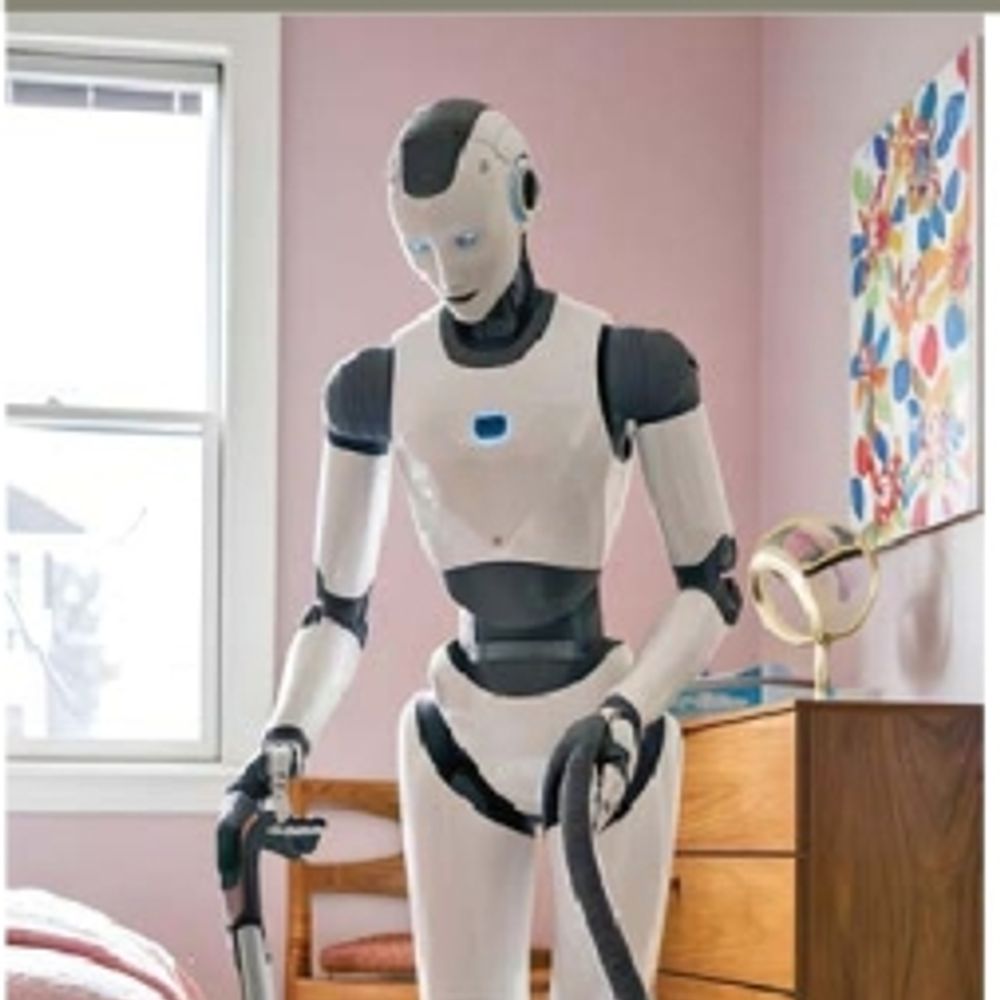
Imagine that you are sweeping your house, cooking or watering your garden, and someone is paying you for these tasks. It’s hard to believe, but a big bet on the future has made it possible. It is part of a new global campaign to train ‘humanoid robots’ (human-like machines). Today, video clips of your household chores have become the most valuable data for the ‘Android Butlers’ (robotic assistants) who will take over your offices and kitchens in the future. Why are human videos important for machines? For decades, robots have been taught using remote control or virtual simulation (software). But in the simulation, the robot is unable to understand how much force is required to lift a glass. Nvidia’s report revealed shocking facts: When 20,000 hours of ‘first-person videos’ (videos shot from a human perspective) were included in the training of robots, their success rate increased by more than 50%. Now these robots are able to do complex tasks like folding a T-shirt, sorting playing cards and opening a bottle cap in a better way. Billions of hours of data are required to train the robot. Human videos are required to teach the robot a task. This is being called ‘Egocentric Data’ or ‘Human Data’. For this, startups around the world are hiring contract workers. Doing these daily tasks with a camera tied on the head. California-based company Micro1 has about 4,000 robotics trainers in 71 countries. These people are sending more than 1.6 lakh hours of video data every month. Company VP Ariane Sadeghi says that this is just the beginning. To fully train the robot, billions of hours of data will be required. Fastest growth of data collection industry: The market of data collection and labeling in the field of robotics is growing rapidly in Asia. According to market research firms, this industry is growing at an average of 30% annually. By 2030 it will be a market worth ~₹92,600 crore. Maximum growth is being seen in Asia. According to companies like Objectways, US companies are paying 3 times the salary for data on US households compared to countries like India. Ravi Rajalingam, founder of Objectways, says, ‘It is important to give the robot accurate data about where it is to be deployed.’ Questions related to safety in domestic work are serious. Even though robots are doing 99.9% accurate work in factories, their success rate in the uncertain environment of homes is only between 70-80%. According to Alexander Verl, Chairman of ‘International Federation of Robotics’, it is less for commercial use. The biggest threat is security. Rajalingam warns, ‘If the robot is unable to differentiate between a doll and a child, the consequences could be fatal. That is why the robot is not being tested with children, but data collection has started with pets.
Source link